
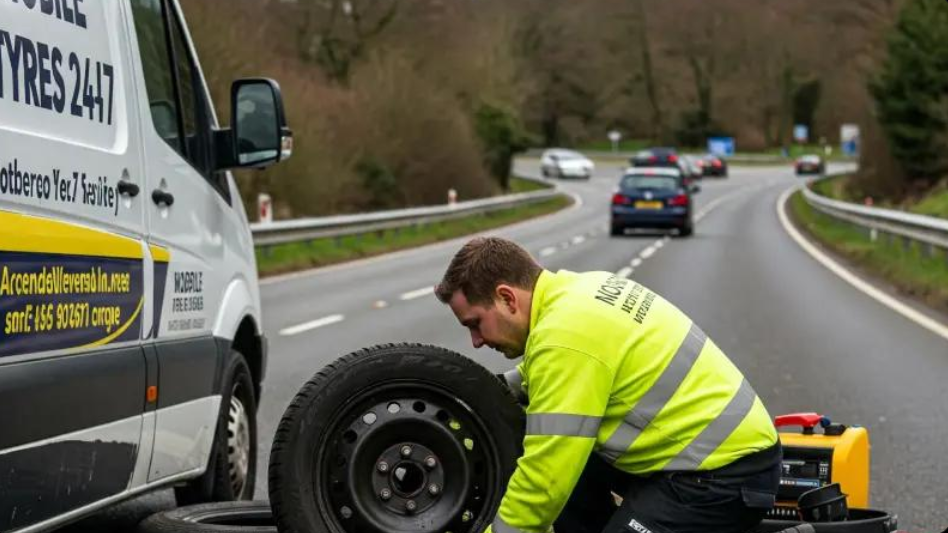
A flat tyre can happen when you least expect it — on your way to work, during a long journey, or even while your car is parked at home. It can be stressful, especially if you are in an unfamiliar location or do not have a spare tyre.
The good news is that knowing what to do can help you stay safe and get your vehicle back on the road. In this guide, we explain the steps to take when you experience a flat tyre, how to recognise tyre damage, and how mobile tyre fitting can make the process more convenient.
1. Find a Safe Place to Stop
If you notice a sudden loss of tyre pressure, unusual vibrations, or your vehicle pulling to one side, reduce your speed gradually. Avoid sudden braking or sharp steering movements.
If it is safe to do so, move your vehicle away from moving traffic and stop in a suitable location. On a motorway, follow the relevant road-safety guidance and use an emergency refuge area or reach a place of safety if possible.
Never attempt to change a tyre in a dangerous position beside fast-moving traffic. Your safety should always come first.
2. Check the Tyre for Visible Damage
Once your vehicle is safely parked, look at the affected tyre from a safe position. You may notice:
- A nail, screw or other object embedded in the tread.
- A visible cut, split or bulge in the tyre.
- A tyre that has lost pressure or appears completely flat.
- Damage to the wheel or the tyre’s sidewall.
Avoid driving on a flat or seriously damaged tyre. Doing so can cause further damage to the tyre and wheel and may affect your ability to control the vehicle.
A visual check can help identify an obvious problem, but a professional inspection may be needed to determine whether the tyre can be repaired safely or needs replacing.
3. Consider Mobile Tyre Fitting
If you cannot safely continue your journey, mobile tyre fitting may be a convenient option. Instead of arranging to take your vehicle to a garage, a mobile tyre technician can attend your location to assess the tyre and carry out suitable work.
Depending on the damage, tyre and service available, this may involve a repair or replacement.
Mobile tyre services can be useful when:
- Your car has a flat tyre at home.
- You discover a damaged tyre at work.
- You experience a tyre problem while travelling.
- You do not have a suitable spare tyre.
- You are unable to visit a traditional tyre garage.
The technician will need enough safe working space around the vehicle to carry out the service.
4. Understand When a Tyre Can Be Repaired
Not every puncture can be repaired. Whether a repair is suitable depends on factors such as the location and size of the damage, the tyre’s condition, and whether it has been driven on while underinflated.
Damage to the sidewall or shoulder area, for example, may mean that replacement is required rather than repair.
A qualified tyre professional can inspect the tyre and explain the available options. If the tyre cannot be repaired safely, replacing it with a suitable tyre is important.
5. Check Your Tyres Regularly
Regular tyre checks can help you identify problems before they become more serious. Make time to check:
- Tyre pressure: Follow the recommended pressures for your vehicle, which are commonly shown in the handbook or on a vehicle information label.
- Tread depth: Check that the tread is legal and suitable for the conditions.
- Visible damage: Look for cuts, bulges, cracks or objects embedded in the tyre.
- Uneven wear: Differences in wear may indicate pressure, alignment or other vehicle issues.
If you notice anything unusual, arrange for the tyre to be checked by a professional.
Why Choose Onsite Mobile Tyres?
When a tyre problem interrupts your day, having a service that comes to your location can save you the trouble of travelling to a garage.
Onsite Mobile Tyres helps drivers check service availability and request assistance for their tyre needs. Whether your vehicle is parked at home, at work or in another suitable location, you can use the website to enter your location and begin your enquiry.
Before arranging a visit, provide accurate details about your vehicle, tyre issue and location so the service team can understand what assistance may be required. Availability, pricing and arrival times should be confirmed for your particular job.
Frequently Asked Questions
Can I drive with a flat tyre?
You should not continue driving on a flat tyre. It can affect vehicle control and cause damage to the tyre and wheel. Stop somewhere safe and arrange appropriate assistance.
Can every punctured tyre be repaired?
No. Repair suitability depends on the damage, its location, the tyre’s condition and relevant safety requirements. A tyre professional can inspect it and advise whether repair or replacement is appropriate.
Can a mobile tyre fitter come to my home or workplace?
Mobile tyre fitting services may be able to attend a home, workplace or other suitable location. Confirm that your location is covered and that there is enough safe space for the work.
What information should I provide when requesting assistance?
It is helpful to provide your location, vehicle make and model, tyre size if known, and a description of the problem. You may also be asked for your vehicle registration and contact details.
Get Help With Your Tyre Problem
A flat tyre does not have to leave you unsure about what to do next. Stop safely, avoid driving on a damaged tyre, and arrange a suitable inspection or replacement.
If you need assistance, visit Onsite Mobile Tyres and check availability for your location.